
The aggregate production industry is undergoing a profound metamorphosis, shifting from a paradigm of mechanical force to one of intelligent, connected systems. Modern mobile crushing machines are no longer defined solely by the strength of their steel or the power of their engines; their core value is increasingly derived from their digital architecture. This transformation is orchestrated by the convergence of two powerful technological domains: the Internet of Things (IoT) and Artificial Intelligence (AI). IoT provides the sensory and connective nervous system, embedding networks of sensors and enabling machine-to-machine communication. AI supplies the cognitive layer, analyzing vast data streams to enable autonomous optimization and predictive foresight. This digital integration is redefining efficiency, uptime, and total cost of ownership, elevating mobile crushers from reactive tools to proactive, intelligent production assets.
The Foundational Layer: IoT as the Sensory Nervous System
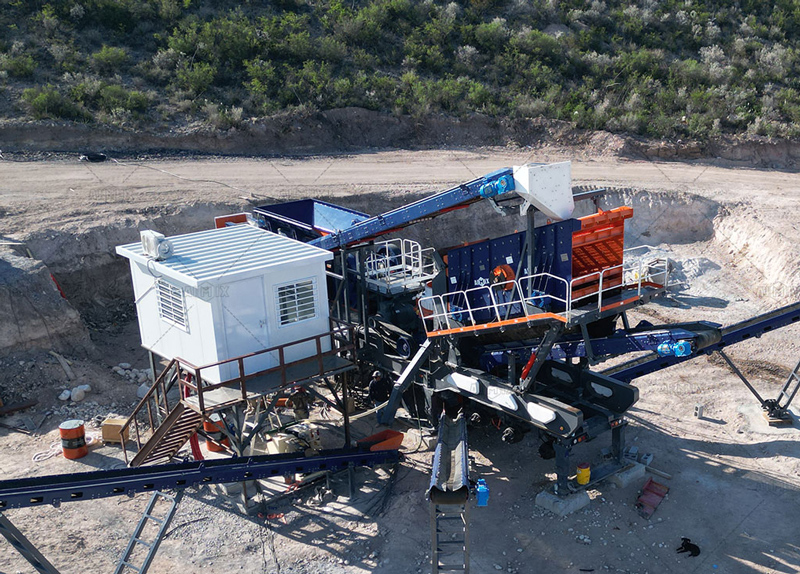
The first stage of this transformation is the instrumentation of the machine with a comprehensive array of Industrial Internet of Things (IIoT) sensors and telemetry units. This creates a continuous, multi-point data stream that captures the operational state of every critical subsystem in real-time, transforming the aggregate crusher into a self-reporting entity.
Real-Time Monitoring of Process and Machine Health Variables
An IoT-equipped mobile crusher captures a far more nuanced dataset than traditional systems. Beyond basic engine RPM and hydraulic pressure, sensors monitor crusher cavity level, main shaft speed and vibration, conveyor belt load, and screen deck acceleration. Environmental sensors track ambient temperature and dust levels. Each data point is timestamped and geo-referenced via onboard GPS, providing contextual intelligence. This granular, real-time telemetry forms the essential raw material for all subsequent analysis and automation, creating a digital twin of the machine’s physical operation that can be monitored remotely from any location.
Secure Data Transmission and Fleet Connectivity
The value of sensor data is unlocked through robust, secure transmission. Modern machines utilize integrated cellular modems or satellite links to transmit encrypted operational data to a cloud-based platform. This allows for the remote monitoring of an entire fleet of mobile crushers from a central operations center. Fleet managers gain a panoramic view of machine locations, operational status, production rates, and health indicators across multiple sites simultaneously. This connectivity dismantles operational silos, enabling data-driven comparisons between machines and sites, and facilitating centralized, informed decision-making for resource allocation and maintenance scheduling.
The Cognitive Layer: AI and Machine Learning for Autonomous Optimization
While IoT provides the data, AI provides the insight. Machine learning algorithms process the incoming data deluge to identify patterns, predict outcomes, and prescribe actions, moving the machine from simple reporting to intelligent adaptation.
Predictive Maintenance and Anomaly Detection
This is one of the most impactful applications. AI models are trained on the vibration, thermal, and acoustic signatures of healthy components. By continuously comparing live sensor data against these learned baselines, the system can detect subtle anomalies indicative of incipient failure—such as the specific frequency shift of a bearing beginning to spall or the thermal profile of an overheating hydraulic motor. This enables truly predictive maintenance, where components are replaced based on their actual condition, not arbitrary hourly intervals. The result is a dramatic reduction in unplanned downtime and a shift from costly reactive repairs to planned, efficient service interventions.
Process Optimization and Closed-Loop Control
AI extends beyond maintenance to optimize the core crushing process itself. Advanced algorithms can analyze the relationship between feed material characteristics (inferred from power draw and cavity sound), stone crusher settings, and product gradation. The system can then autonomously adjust parameters like the closed-side setting (CSS) on a cone crusher or the feeder speed to maintain optimal throughput and product quality despite variations in feed material. This closed-loop control ensures the machine consistently operates at its peak efficiency envelope, maximizing yield of in-spec product while minimizing energy consumption and wear on components.
Systemic Integration and Strategic Business Intelligence
The ultimate manifestation of this digital transformation is the seamless integration of intelligent machines into broader business and project management systems, creating a cohesive data ecosystem that drives strategic advantage.
Integration with ERP, Logistics, and Weighing Systems
Data from the crushing fleet does not exist in isolation. Advanced platforms allow for integration with Enterprise Resource Planning (ERP) software for automated inventory tracking of produced aggregate. Production data can be linked directly to truck dispatch and ticketing systems, automating load documentation and reconciling production with sales. This creates an unbroken digital thread from the crusher’s output to the customer’s invoice, enhancing operational transparency, reducing administrative overhead, and minimizing discrepancies.
Data Analytics for Strategic Decision Support
The aggregated, historical data from a fleet of connected crushers becomes a powerful asset for strategic planning. Analytics dashboards can reveal long-term trends in fuel efficiency per ton, wear-part consumption rates across different geologies, and machine utilization patterns. This intelligence informs critical capital expenditure decisions, such as which machine models are most cost-effective for specific rock types, or when to schedule fleet renewals. It enables benchmarking against industry standards and fosters a culture of continuous, data-driven improvement. In this context, the mobile rock crushing machine evolves from a capital asset into a continuous source of business intelligence, fundamentally altering how aggregate producers plan, operate, and compete in the market.